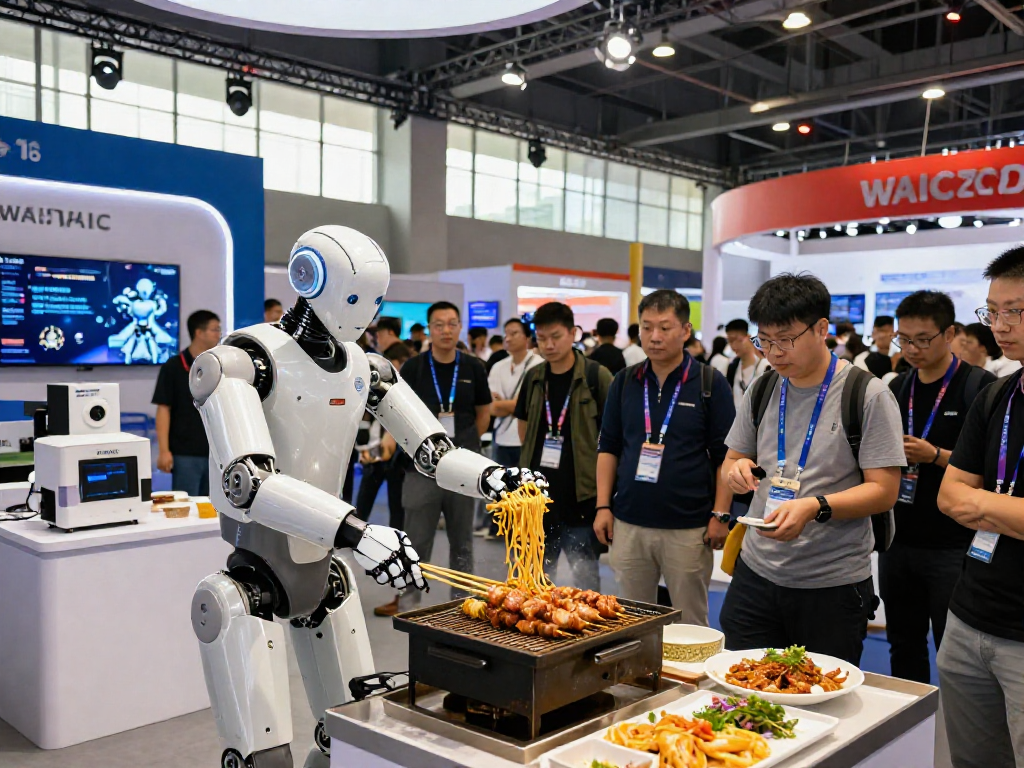
Humanoid Robots: The Future of Culinary Arts
As we continue to witness rapid advancements in robotics and artificial intelligence, the culinary arts sector is not left behind. Innovations like the brain-to-robot AI platform, demonstrated by BrainCo during the WAIC 2026, are setting the stage for a new era where robots seamlessly integrate into kitchens. These robots, equipped with sophisticated AI capabilities, can prepare intricate dishes such as kebabs and hand-pulled noodles, showcasing not just functionality but also an understanding of culinary techniques. For those looking to stay updated on robotic innovations, Robot24 is your go-to resource.
Understanding the Brain-to-Robot AI Platform
The brain-to-robot AI platform introduced by BrainCo at WAIC 2026 represents a significant leap in robot autonomy. This technology employs machine learning algorithms to understand and replicate human cooking skills. By analyzing data from professional chefs, these robots learn various cooking techniques, allowing them to function with precision and creativity. The brain-to-robot interface not only enhances the cooking process but also adapts to individual tastes and preferences, making them invaluable in both domestic and commercial kitchens.
Real-world Applications of Cooking Robots
The real-world applications of cooking robots extend beyond mere preparation; they can play an essential role in food safety, consistency, and even customer interaction. For instance, restaurants can use these robots to ensure that every dish served meets the same quality standards, significantly reducing human error. Furthermore, robots can be programmed to comply with dietary restrictions or preferences, creating personalized dining experiences. The adaptability of cooking robots exemplifies their potential to revolutionize the culinary landscape.
Success Stories from WAIC 2026 Demonstrations
During the WAIC 2026 demonstrations, several cooking robots stood out by successfully preparing traditional Chinese dishes, captivating audiences with their efficiency and precision. The event highlighted not just their cooking abilities but also their potential as engaging personalities in dining experiences. Some robots were designed to interact with customers, providing recommendations based on previous orders, thereby enhancing customer satisfaction and engagement.
The Role of AI in Enhancing Robot Performance
Artificial intelligence plays a pivotal role in enhancing the performance of robots across various industries. It drives the decision-making processes and operational capabilities of robots, allowing them to perform tasks with increasing levels of accuracy and efficiency. With AI, robots can analyze vast amounts of data to improve their processes continuously, a crucial aspect in high-stakes environments like manufacturing and healthcare.
AI Algorithms Driving Robotic Precision
AI algorithms are at the heart of robotic innovation. Techniques such as deep learning and neural networks enable robots to process real-time data, make informed decisions, and enhance their performance autonomously. For example, the AI algorithms that power the new generation of robotic arms used in manufacturing can optimize workflows and reduce cycle times, significantly increasing productivity.
Case Studies: AI Success in Robotics
One notable case study involves a manufacturing facility that implemented AI-driven robotic systems to streamline its assembly line. By analyzing production data, these robots were able to predict equipment failures before they occurred, reducing downtime significantly. This implementation not only saved costs but also ensured that production targets were consistently met.
Future Trends in AI for Robotics
Looking forward, we can expect to see AI increasingly integrated into robotics across various sectors. Trends such as collaborative robots, or cobots, that work alongside humans, will gain traction. These robots will utilize AI to interpret human instructions and adapt to changing environments, thereby making them indispensable in dynamic work settings.
Integrating Robotics in Educational Settings
The integration of robotics in educational settings is proving to be transformative. Schools are beginning to recognize the potential of robots not just as teaching aids, but as interactive learning tools that can facilitate engagement and enhance educational outcomes.
Salamanca High School's Humanoid Teaching Assistant
Recently, Salamanca High School introduced a humanoid robot as a classroom teaching assistant, marking a noteworthy advancement in educational robotics. This assistant is designed to interact with students, helping them with their studies and answering questions in real time. The introduction of such robots in classrooms fosters an engaging learning environment while preparing students for a technology-driven future.
Benefits of Robotics in Classrooms
Robotics in education offers numerous benefits:
- Enhanced Engagement: Robots can capture students' attention more effectively than traditional teaching methods.
- Personalized Learning: Robots can cater to individual learning paces, providing support where necessary.
- STEM Encouragement: Robotics programs spark interest in science, technology, engineering, and mathematics.
Challenges of Robot Integration in Education
Despite the advantages, challenges remain. Teachers must be adequately trained to integrate robotics into their curricula effectively. Additionally, there may be initial resistance from both students and parents regarding new teaching methods that incorporate technology. Overcoming these hurdles is essential for the successful deployment of educational robots.
Emerging Robotics Companies and Their Innovations
A plethora of new companies are entering the robotics space, driving innovation and competition. These organizations are emerging with groundbreaking technologies that can redefine industry standards.
Highlights from AGIBOT's New Model Launch
AGIBOT recently unveiled four new robotic models at WAIC 2026, showcasing their capabilities in real-world scenarios. Each model was designed with specific functionalities, from heavy lifting in warehouses to delicate assembly tasks in manufacturing. These innovations demonstrate AGIBOT’s commitment to addressing diverse market needs through specialized design.
Muks Robotics' Spaceo Prime Prototype Overview
Muks Robotics introduced their prototype humanoid robot, Spaceo Prime, which is designed for both terrestrial and extraterrestrial applications. This robot mimics human movement remarkably, making it suitable for tasks in environments that are hazardous for humans, such as space exploration and disaster relief operations on Earth.
Future of Manufacturing with Holiday Robotics' FRIDAY
Holiday Robotics recently secured $105 million in funding to advance their humanoid robot, FRIDAY, which is aimed at assisting with manufacturing jobs. FRIDAY is designed to handle repetitive tasks with precision, paving the way for more efficient manufacturing processes and addressing labor shortages in various industries.
Safety and Ethics in Robotics Deployment
As robots become increasingly integrated into our daily lives, safety and ethical considerations are paramount. The deployment of robots must be carefully managed to mitigate risks associated with their use in public and private settings.
Understanding Coherence Guard Technology
Palm Garden's Coherence Guard technology is a groundbreaking advancement designed to ensure that service robots act more naturally around people. This technology utilizes sensors and AI to allow robots to interpret human behavior and adjust their actions accordingly, preventing accidents and enhancing user experience.
Ethical Considerations in Humanoid Robotics
As robots become more autonomous, ethical dilemmas arise regarding their decision-making capabilities. It is essential to establish guidelines that ensure robots operate within ethical boundaries, particularly in sensitive environments like healthcare and law enforcement.
Future Regulations Impacting Robotics
As the industry grows, so will the need for regulations governing robotic usage. Potential future regulations may include standards for AI transparency, liability in the event of robotic malfunctions, and requirements for ethical AI development.
What Innovations are Coming Next?
The future of robotics is bright and teeming with innovations. From advancements in AI to more sophisticated robotic designs, several emerging technologies will shape the next wave of robotic applications. Areas like soft robotics, which focuses on creating robots with flexible and adaptable structures, are becoming increasingly significant.
How Robotics Will Impact Various Industries?
Robotics is poised to transform various industries beyond manufacturing and education. Healthcare, for instance, is set to benefit from robotic systems that assist in surgeries and patient care, improving outcomes significantly. The agricultural sector will also see robots that can perform tasks such as planting and harvesting crops more efficiently than human labor.
What are the Trends in Humanoid Robotics for 2026?
Looking ahead to 2026, we anticipate significant trends in humanoid robotics, including increased personalization of robot interactions and advancements in human-robot collaboration. As these robots become more intuitive, they will likely play a larger role in service-oriented industries.
How Will AI Influence Future Robotics?
AI’s influence will continue to shape the trajectory of robotics. As AI becomes more sophisticated, robots will become more autonomous, requiring less human intervention while handling complex tasks. This evolution could lead to the creation of robots capable of learning from their experiences, making them more effective over time.
Are Humanoid Robots Ready for the Workforce?
Humanoid robots are gradually becoming ready for the workforce. With advancements in AI and robotics, they can perform specific tasks efficiently and can be trained for various roles across different sectors. However, widespread integration will require overcoming societal perceptions and safety concerns.
What are the Educational Benefits of Humanoid Robots?
Humanoid robots offer unique educational benefits, such as enhancing engagement in learning environments and providing personalized support for students. Their presence can stimulate interest in technology and robotics, encouraging students to pursue careers in STEM fields.
How Can Robotics Improve Our Daily Lives?
Robotics has the potential to enhance our daily lives significantly. From household chores to complex tasks in healthcare, robots can take on responsibilities that allow humans to focus on more creative and meaningful activities.
What Robotics Innovations Should We Watch Out For?
Robotics innovations poised to make waves in the near future include advancements in AI-driven personal assistants, wearable robotics for enhanced mobility, and smart robots equipped with emotional intelligence to facilitate better human interaction.